In July of 1960 Avening celebrated its centennial with three days of celebrations including a dance, ball games, a display of old photos, slide show, children’s choir, Sunday church service, and a grand parade of 50 floats.
As I read the report in The Creemore Star I found no information about the village’s origins and what it was that marked the founding about 1860.
And now I have found out.
A man by the name of George Carruthers who was from Dumfies, Scotland arrived in what became Avening in 1851 after having an adventurous life while still a young man. He had been to Australia, New Zealand and fought in the Opium Wars in China. Returning to Scotland, he felt restless and crossed the Atlantic landing in New York. There he stayed for a year working, then moved on to Buffalo and finally made his way to Southern Ontario to visit his brother in Scott Township.
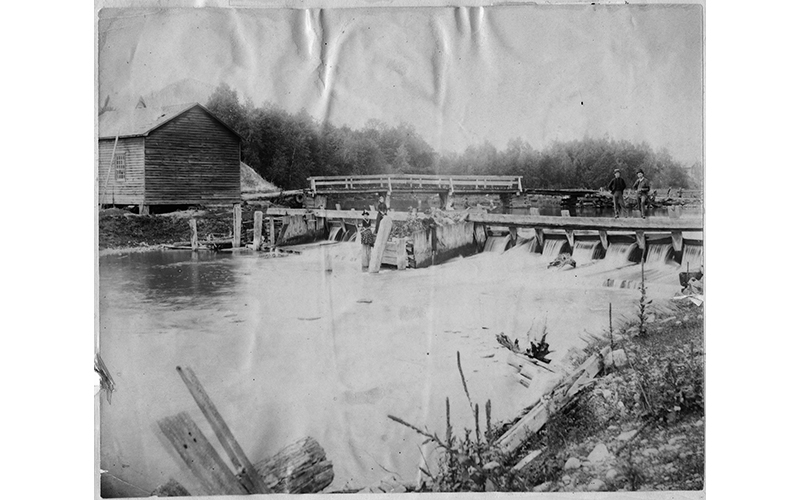
He wasn’t done travelling even then and made his way to what we now know as Avening. This was in 1851. He realized that the Mad River had good possibilities for providing water power that would run a mill. He took up 100 acres, cleared 17, built a house, and left for five years, living in Bradford.
Finally, George Carruthers returned to Avening in 1858. He and his second son built a dam and a saw mill purchasing 11 acres from John Carleton. They also bought 500 acres of land in the flats and cleared it out for the saw mill. This took time, of course, which provides us with the information that 1860 is regarded as the date of Avening’s beginnings and the reason to celebrate one hundred years in 1960.
Most of the lumber was sold and went by train to markets in Toronto and abroad. At this time the closest train was at Sunnidale Station eight miles away.
The Carruthers employed about six men year round. In winter they did the logging, in spring and summer the sawing. They stumped and cleared the land, grew grain and threshed it by water power at the mill. George gave to each of his four sons 100 acres of cleared land. Richard George received the deed to the original 100 acres or the home place. It was named Clydebank after that busy port in Scotland.
George died in 1866. The Carruthers family continued to play a large part in the development of Avening. That is a story for later.
A big thank you goes to Myrtle Carruthers who generously shared the family album and its contents with me.
Helen Blackburn is a retired teacher, avid gardener and a long-time contributor to The Creemore Echo. She writes about local history.