Rebirth and regrowth
What happens after fire? Rejuvenation.
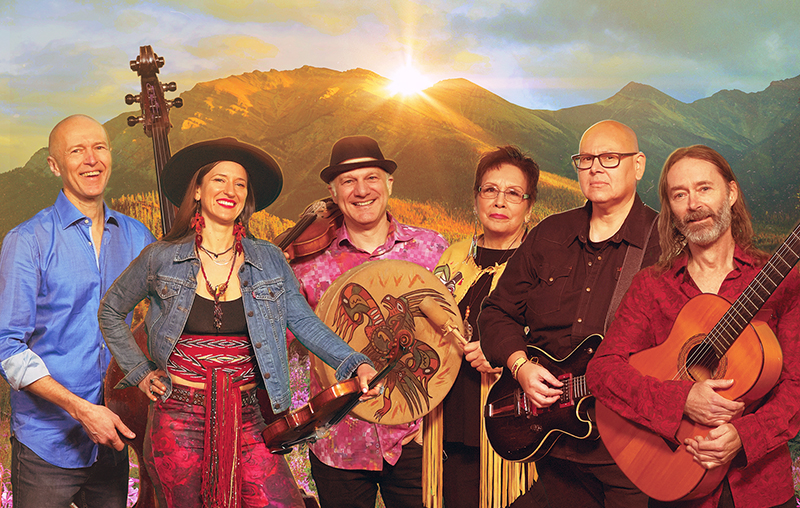
“We just thought it was a really beautiful metaphor for the project and how we could work together,” says Sultans of String bandleader Chris McKhool of the inspiration behind Walking Through the Fire, a collaboration with multiple Indigenous artists.
Fireweed, because of its complex underground network of rhizomes, is the first plant to emerge after a forest fire and the once barren landscape becomes awash in magenta. The plant’s nutrients go back into the soil to nourish the next generation of trees and plants.
“And so there’s a little bit of a metaphor here when people talk about reconciliation sometimes people get a little bit nervous because they don’t know what it means or how it’s going to affect them. What happens after the fire is this regrowth and rebirth. I think, when Indigenous and non-Indigenous people work together and we have this experience together,” says McKhool. “It’s just been an incredible journey discovering these artists.”
Three collaborators will be joining Sultans of String at Creemore Arts Fest including Ojibwe/Finnish singer-songwriter Marc Meriläinen (Nadjiwan).
Meriläinen opens the show with the song A Beautiful Darkness, a song about bringing people together.
“The song’s about breaking through the barriers that keep us apart, because we have many of those in society, and we’re stronger when we come together,” says Meriläinen. “That’s the only way we’re going to move forward to have a brighter better future for us all is working together.”
McKhool says the whole project was the result of a direct call to action from Duke Redbird, an Ojibway elder, with whom he had been collaborating on a song honouring the contributions of refugees and new immigrants.
McKhool says Redbird asked him, “Well, what are you going to do for awareness of Indigenous issues like what you’ve done for new immigrants and refugees?”
“You don’t say no to Duke Redbird, so that kind of got the ball rolling,” he said.
The project kept evolving to include about 20 Indigenous artists.
“As Duke Redbird says, before reconciliation can take place the true history of the Indigenous experience and the history of residential schools and genocide has to be told,” says McKhool. “My best way of trying to further reconciliation is just to share the space... create a show where these artists can talk about their experience, tell their stories from their point of view. It’s not my story, it’s their story, but I can help provide the space for it. Hearing the storytelling and the songs directly from Indigenous artists is way better than what you will get in the media, two or three times removed from the actual artist.”
Meriläinen says, “The easiest way to get information across is through music and art... it might inspire you to further investigate or learn more about Indigenous issues and challenges that we’re having today. We’re not forcing anything down your throat. I like to think that we’re planting seeds. Hopefully those germinate into something beautiful.”
He says storytelling has always been a culturally significant way of passing on lessons and information. “A lot of times you’re learning and you don’t even know it because you’re having so much fun... that creates such a connection within you spiritually, rather than just reading a book or listening to a lecture,” says Meriläinen. “Movement tends to be more intimate and interactive especially if you’re there and you get immersed into the show, and become a part of the show and the messages stay with you longer.”
The Creemore performance will also feature
Coast Tsm’syen singer-songwriter Shannon Thunderbird, and Alyssa Delbaere-Sawchuk of the Métis Fiddler Quartet.
The show is free and will take place on the stage at Creemore Village Green at 2 p.m. on Saturday, Oct. 3.