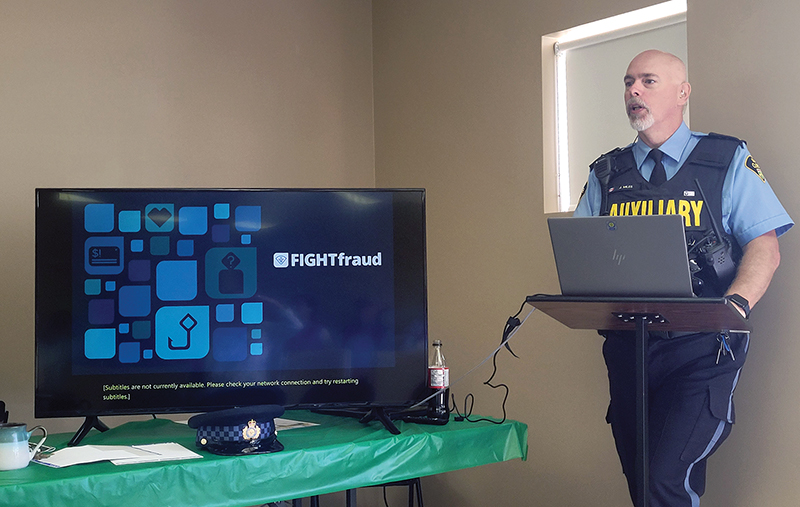
OPP hopes to reduce fraud stigma, increase reporting
Removing the stigma around falling prey to a fraud so that people are willing to seek help is key to stopping the spread according to Auxiliary OPP Constable Jason Miles. Speaking at a recent town hall meeting in Mulmur, Miles said the vast majority of frauds are not reported, often because victims are unwilling to admit that they were duped.
Miles says fraud falls into four basic categories – romance scams, emergency or grandparent scams, CRA fraud and bank inspector fraud. Statistics from the Canadian Anti Fraud Centre suggest that in 2022, more than $9.2 million in losses were reported by seniors who fell victim to so called grandparent scams, and that only five to 10 per cent of incidents are actually reported to authorities.
In the grandparent scam, fraudsters contact victims posing as police officers and ask for large payments to cover medical or legal expenses for a relative who is in trouble. They rely on making the victim feel rushed, and isolating them by telling them not to discuss the call with anyone else. Miles described an anti-fraud campaign in the UK which encourages would-be victims to ‘Stop, Challenge and Protect.’ Slow the fraudsters down by refusing to comply with their deadlines and demands and seek confirmation of the situation by contacting authorities in the jurisdiction they claim to be calling from. Never rely on contact information the caller provides as this can be easily faked. Finally, for everyone’s protection, report all incidents whether or not you fall prey to the scam as this can help police link related occurrences and lay appropriate charges.
A request for payment in gift cards, money transfer or cryptocurrency is a giant red flag, according to Miles. No government agency would ever make such a request. He says you should never click on a link in any unsolicited message, and suggests the best response to suspicious incoming calls is to simply hang up.
Miles says fraudsters are constantly coming up with new schemes. One currently making the rounds is a text message, purportedly from the Canada Revenue Agency (CRA) asking you to click on a link to claim a rebate. Don’t do it. Miles says the CRA would never send such a message. Another popular scam is the bank inspector ploy where victims are asked to help the bank investigate potential theft by an employee. Miles says banks have their own sophisticated internal investigation teams and would never solicit help from a customer.
The best defence is a bit of healthy scepticism. Miles suggests you should ignore messages from anyone you don’t know and trust, and be cautious about messages from people you do trust. The Government of Canada’s Canadian Anti-Fraud Centre (CAFC) website has information on the latest scams and how to protect yourself. All incidents of fraud or attempted fraud should be reported to the CAFC at 1-888-495-8501.