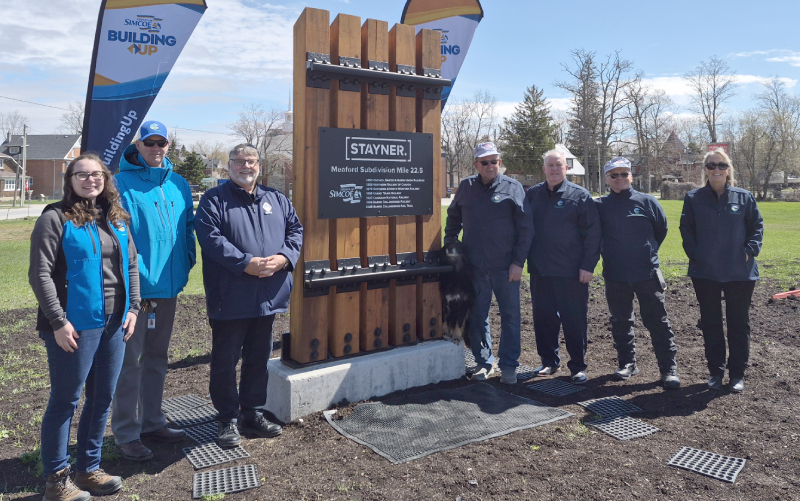
Rail trail extension declared open
A newly expanded Barrie Collingwood Railway (BCRY) Active Transportation Trail is much more than a connection between two points, according to Brandon Matheson, program supervisor for tourism Simcoe County.
“This is an invitation to slow down and enjoy the scenery, and it strengthens the links between communities,” he said.
County and municipal representatives gathered in Stayner last week to officially open a 23-kilometre expansion to the trail. In total, it now extends nearly 34 kilometres from Collingwood to Angus, and passing through Stayner and New Lowell. Matheson says the trail will provide residents and visitors with a safe, accessible route for walking, cycling and other non-motorized uses, while preserving a historic transportation corridor.
“This trail will promote walking and cycling for recreation, support healthy living, boost tourism and ultimately foster a healthier, stronger and more connected county,” said Simcoe County Warden Basil Clarke.
The project reflects the county’s long-term vision to expand its network of active transportation infrastructure, enhance quality of life for residents and support environmentally responsible travel options. By repurposing existing rail infrastructure, the trail also preserves an important piece of Simcoe County’s transportation history while adapting it to meet modern community needs.
The last trains between Collingwood and Utopia operated in 2011. The county purchased this section of railway in 2018 and began the project of creating the active transportation trail.
Matheson says cycling is a major tourism attraction in the area, which is estimated to have injected more than $2.2 million into the local economy in 2025, including about 5,000 overnight stays.
Clearview Township Mayor Doug Measures said the rail corridor has been well known as a snowmobile trail, and will now become a safe, scenic space for non- motorized users the rest of the year.
Rob Elliot, general manager of engineering, planning and environment for the County of Simcoe, says the trail cost roughly $6 million and represents the successful completion of a complex, and highly challenging project.
“It’s not just a matter of throwing down some gravel,” he said. “For example, rail bridges don’t have handrails. We had to consider grading, drainage and accessibility all while respecting the environment and the heritage of the railway.”